A damaged, cracked, weakened, or severely discoloured tooth can affect your smile, chewing ability, and overall oral health. When a tooth requires more protection than a regular filling can provide, a ceramic dental crown may be recommended to restore its shape, strength, and appearance.
A ceramic dental crown is a custom-made, tooth-shaped restoration placed over a prepared natural tooth. All-ceramic crowns contain no metal framework, allowing light to pass naturally through the tooth just like natural enamel. They are ideal for both front and back teeth where aesthetics and biocompatibility are paramount.
At Dr Kapil Garella’s Dental and Implant Clinic in Paschim Vihar, every treatment plan is individualized to deliver maximum clinical longevity, comfort, and natural aesthetics.
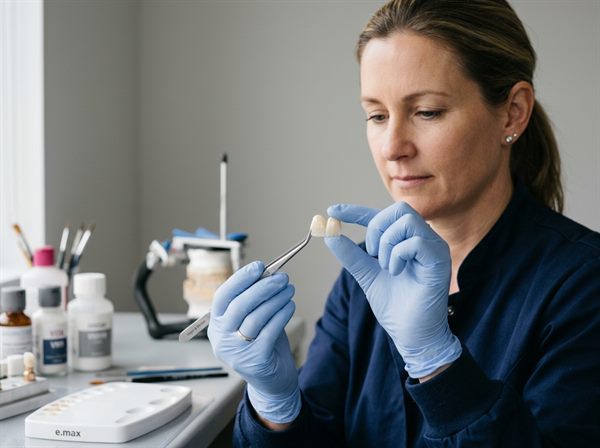
Ceramic crowns protect structurally compromised teeth while delivering lifelike smile aesthetics.
Encapsulates remaining healthy tooth structure when decay is too extensive for direct composite fillings.
Restores strength and seals fragile, non-vital teeth against catastrophic fractures.
Binds split enamel cusps together, preventing fracture propagation to the tooth root.
Masks severe intrinsic staining or developmental enamel defects resistant to bleaching.
Rebuilds lost chewing height and natural contours caused by acid erosion or bruxism.
Forms the natural-looking crown attached to an integrated dental implant abutment.
Experience treatment focused on patient comfort, biocompatibility, and lasting clinical outcomes.
Reproduces the subtle opalescence, hue, and light scattering of healthy virgin teeth.
Zero metallic taste, zero electrical galvanism, and zero dark grey lines at the gumline.
Smooth, glazed ceramic surfaces are highly gentle on surrounding marginal gum tissues.
Glass-ceramics like lithium disilicate form ultra-strong micromechanical bonds to dentin.
Individually stained and hand-polished to blend invisibly with your neighboring smile.
Provides many years of reliable chewing stability when combined with good oral hygiene.
Comprehensive examination of tooth stability, root canal health, and bone support.
Gentle circumferential shaping creates uniform clearance under local anesthesia.
A 3D optical scan captures the exact margins and opposing bite relationships.
Protects the prepared tooth and maintains chewing comfort during fabrication.
Crafted using CAD/CAM milling or heat-pressed techniques with custom glazing.
The crown is adhesive-bonded with resin cement, checked for bite harmony, and polished.
Over 28 years of clinical excellence providing dependable, compassionate care in West Delhi under Dr. Kapil Garella.
Equipped with 3D optical intraoral scanners, diode lasers, and Class-B hospital vacuum sterilization systems.
Custom recommendations tailored to your unique anatomy, bone health, lifestyle, and aesthetic preferences.
Full-scope dental clinic providing implants, clear aligners, crowns, root canals, and pediatric care under one roof.
Clear explanations of treatment stages, material choices, expected outcomes, and honest fee estimates.
Located at 416, First Floor, Bhera Enclave, Paschim Vihar, New Delhi – 110087 with ample parking and accessibility.
The cost depends on the ceramic material, tooth condition, laboratory requirements, and whether additional treatment is needed. A dental examination is necessary for an individualized estimate.
Ceramic crowns provide tooth-coloured aesthetics and are suitable for many restorative situations. Metal crowns have different mechanical properties and may be appropriate in selected cases. The best option depends on clinical requirements.
Ceramic crowns can last for many years, but longevity varies according to material, bite forces, oral hygiene, and the condition of the supporting tooth.
Local anaesthesia is commonly used when required. Temporary sensitivity or mild discomfort may occur after treatment.
Yes. Certain ceramic materials are commonly selected for front teeth because they can provide natural-looking colour and translucency.
Yes. Suitable ceramic materials, including certain zirconia and lithium disilicate restorations, can be used for posterior teeth depending on clinical requirements.
Ceramic crowns can be customized to resemble surrounding natural teeth. The final appearance depends on material selection, shade matching, tooth preparation, and fabrication.
Not always. A crown may be recommended when the tooth has significant structural loss or requires additional protection, particularly in posterior teeth.
Yes. Although dental ceramics are designed for strength, crowns can chip or fracture under excessive forces or other unfavourable conditions.
Zirconia is a type of ceramic. Compared with some glass-ceramic materials, zirconia generally offers higher strength, while certain glass-ceramics provide excellent translucency.
Many conventional crown treatments require two or more appointments. Some digital workflows may allow treatment in fewer visits, depending on equipment availability and clinical requirements.
Minor damage may sometimes be repaired, but extensive fractures or poor fit may require crown replacement. A dentist must examine the restoration to determine the appropriate approach.
Schedule your comprehensive clinical evaluation with Dr. Kapil Garella. Transparent treatment planning, gentle painless dentistry, and advanced technology in Paschim Vihar.