Damaged, cracked, weakened, or severely worn teeth can affect your ability to chew comfortably and smile confidently. When a tooth requires additional protection and restoration, a zirconia dental crown may be recommended to help restore its shape, function, and appearance.
At Dr Kapil Garella’s Dental and Implant Clinic, we provide personalized restorative dental care, including Zirconia Crowns in Paschim Vihar, Delhi, for patients seeking durable, tooth-coloured dental restorations. Zirconia crowns are made from a strong ceramic material that can be customized to complement the appearance of natural teeth. They are commonly used to restore teeth affected by extensive decay, fractures, large fillings, or previous dental treatment.
Whether you need a dental crown after root canal treatment, want to restore a damaged tooth, or are exploring metal-free dental restorations, Dr. Kapil Garella can assess your dental condition and recommend a suitable treatment option.
Zirconia crowns are dental restorations made from zirconium dioxide, a high-strength ceramic material widely used in modern restorative dentistry. A zirconia crown covers a prepared natural tooth to restore its anatomical shape, aesthetic appearance, and masticatory function. Zirconia crowns may also be used as restorations supported by dental implants.
Unlike traditional metal crowns, zirconia crowns are completely metal-free and can be manufactured in different tooth-coloured shades. Modern zirconia materials are available in varying levels of strength and translucency, allowing dentists to select suitable restorations for different clinical situations.
At our dental clinic in Paschim Vihar, crown selection depends on factors such as tooth location, remaining tooth structure, bite forces, gum health, and aesthetic requirements.
Zirconia crowns may be recommended in several restorative dental situations to rebuild weakened tooth structure and restore chewing integrity.
When a tooth has extensive decay, a regular filling may not provide adequate protection. A zirconia crown may be considered to restore the remaining tooth structure after appropriate decay removal.
A fractured tooth may require a crown to protect weakened areas and restore its shape. Treatment suitability depends on fracture extent; some severely damaged teeth may require alternative therapies.
Teeth that have undergone root canal treatment often lose substantial structural moisture and dentin. A zirconia crown provides crucial cusp protection against fracture, particularly on premolars and molars.
Excessive tooth wear caused by grinding (bruxism), acid erosion, or clenching can collapse vertical bite dimension. Zirconia crowns restore lost anatomical height and stable bite relationships.
An old crown may require replacement if it becomes chipped, loose, poorly fitting, or develops recurrent margin decay. Zirconia offers a biocompatible, metal-free replacement alternative.
Zirconia crowns can also be used to restore dental implants, secured to an implant abutment rather than a natural root. If exploring Dental Implants in Paschim Vihar, zirconia is a premier choice.
Different zirconia crown designs are available depending on the location of the tooth, functional bite forces, and aesthetic restorative requirements.
Monolithic zirconia crowns are manufactured from a single solid block of high-grade zirconium dioxide, milled via high-precision CAD/CAM systems.
Potential Advantages:Layered zirconia crowns combine an ultra-strong zirconia core framework covered with an artistic porcelain/ceramic outer layer.
Potential Advantages:High-translucency (HT / multi-layered) zirconia formulations provide enhanced light transmission without requiring porcelain layering.
Potential Advantages:Zirconia combines structural durability with metal-free biocompatibility and natural aesthetics.
Zirconia is renowned for its high fracture resistance and toughness, capable of withstanding heavy posterior masticatory forces.
Customized shade guides and translucent multi-layered blocks blend seamlessly with your adjacent natural teeth.
100% biocompatible ceramic with no metallic sub-structure, eliminating allergic sensitivities and dark grey gingival margins.
Precision anatomical cusps and occlusal morphology restore optimal biting balance and chewing efficiency.
High-precision computer scanning and milling ensure marginal seal accuracy to protect the underlying tooth from bacterial leakage.
Provides years of dependable clinical service when properly planned, cemented, and cared for with routine oral hygiene.
At Dr Kapil Garella’s Dental and Implant Clinic, zirconia crown treatment follows a systematic, minimally invasive clinical protocol to ensure lasting comfort and fit.
Your dentist examines the affected tooth, gums, bite, and neighbouring teeth. Digital dental X-rays may be recommended to assess tooth roots and periodontal bone support.
The dentist confirms whether a crown is appropriate and discusses restorative material choices. Alternatives, expected benefits, timelines, and costs are explained transparently.
Under gentle local anesthesia, the tooth is shaped to create adequate clearance for the crown. If substantial structure was previously lost, a composite core buildup is performed.
A comfortable 3D optical intraoral digital scan is captured, recording the exact 3D geometry of the prepared tooth and opposing bite without messy impression paste.
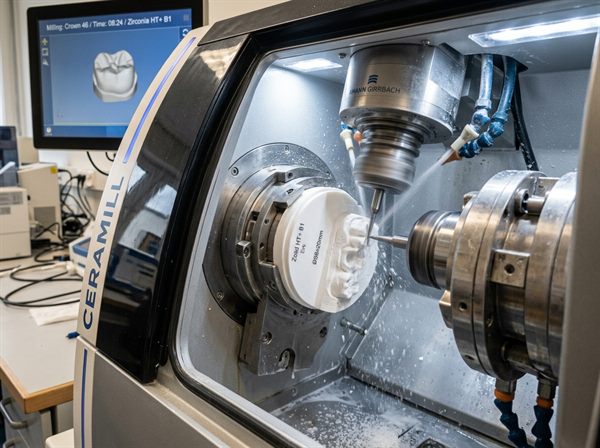
The crown is digitally designed and robotically milled from medical-grade zirconia blocks, followed by high-temperature sintering and custom hand-glazing.
The completed crown is tried in to evaluate marginal seal, interproximal contacts, bite alignment, and aesthetic shade integration with adjacent teeth.
The crown is permanently secured using advanced resin or glass-ionomer cementation protocols. Bite movements are verified, and tailored home care instructions are provided.
Computer-aided design and computer-aided manufacturing, commonly called CAD/CAM, are widely used in the fabrication of zirconia restorations. For patients exploring CAD CAM Dental Restoration in Delhi, digitally designed crowns offer exceptional sub-micron accuracy when combined with rigorous clinical preparation.
Our digital process involves:
CAD/CAM technology significantly enhances fabrication accuracy, but successful long-term outcomes still depend on proper tooth preparation, accurate clinical records, suitable materials, and experienced clinical placement.
Understanding how zirconia compares with alternative restorative materials helps in selecting the right restoration for your clinical situation.
Zirconia is a type of ceramic material. However, patients often compare zirconia crowns with other all-ceramic crowns, such as lithium disilicate (glass-ceramic) restorations.
| Zirconia Crowns | Glass-Ceramic Crowns (e.g. E-max) |
|---|---|
| Generally offer superior fracture resistance and mechanical toughness. | Often selected for exceptional translucency and optical aesthetics. |
| Highly suitable for posterior molars and patients with strong bite forces. | Ideal for anterior teeth and cosmetic smile makeovers where translucency is critical. |
| Available in monolithic and multi-layered translucency levels. | Closely mimics natural enamel optical characteristics and opalescence. |
| Commonly manufactured using high-speed CAD/CAM robotic milling. | Manufactured via CAD/CAM milling or heat-pressed laboratory techniques. |
| Material selection emphasizes maximum strength and functional longevity. | Material selection balances delicate aesthetic demands and moderate functional needs. |
Neither material is universally better. The appropriate choice depends on the tooth’s location, bite forces, available space, aesthetic expectations, and clinical findings.
Zirconia crowns can function successfully for many years, but their lifespan varies according to:
Like other dental restorations, zirconia crowns involve certain considerations:
If you are looking for an Experienced Dentist in Paschim Vihar for restorative dental care, selecting a clinic that emphasizes individualized treatment planning is essential.
Our clinic has been serving patients across Paschim Vihar and West Delhi for over 28 years, delivering gentle and trusted dental solutions.
We assess tooth condition, occlusion, periodontal support, and smile goals thoroughly before recommending a crown restoration.
Treatment planning carefully factors in hue, chroma, translucency, and emergence profile to complement surrounding natural dentition.
In addition to zirconia crowns, we provide ceramic crowns, root canal treatments, dental implants, and cosmetic smile designs.
We explain options, material characteristics, expected benefits, limitations, and aftercare clearly with complete clinical transparency.
Located at 416, First Floor, Bhera Enclave, Paschim Vihar, New Delhi – 110087, easily accessible for patients across West Delhi.
Here are answers to common questions asked by patients considering zirconia restorations in Paschim Vihar.
The cost depends on the zirconia material, tooth condition, crown design, laboratory requirements, and additional treatment needs. A consultation is necessary for an individualized estimate.
Zirconia is a ceramic material. Compared with some glass-ceramics, zirconia generally offers higher strength, while certain glass-ceramic materials provide excellent translucency. The best option depends on clinical needs.
Zirconia crowns can last for many years with appropriate care. Longevity depends on oral hygiene, bite forces, crown design, and the health of the underlying tooth.
Yes. Certain high-translucency zirconia materials can be used for front teeth when clinically appropriate.
Yes. Zirconia crowns are commonly used for posterior teeth because of their high strength and wear resistance.
Modern zirconia crowns can be customized in shape and shade to complement natural teeth. Their final appearance depends on material selection and fabrication.
Local anaesthesia is commonly used when necessary. Temporary sensitivity or mild discomfort may occur after treatment.
Yes. Although zirconia has high fracture resistance, crowns can fracture or chip under excessive forces or unfavourable conditions.
Yes. A zirconia crown may be recommended for a root canal-treated tooth when additional structural protection is required.
Yes. Zirconia crowns are made from zirconium dioxide ceramic and do not contain a metal framework.
Many crown treatments require two or more appointments, although the number of visits depends on the clinical situation and fabrication workflow.
Yes. A crown may loosen because of cement failure, changes in the supporting tooth, decay, or other factors. A loose crown should be assessed by a dentist.
Restore Your Tooth. Strengthen Your Smile. Explore Zirconia Dental Crowns Today! Damaged or weakened teeth can be restored with precision tooth-coloured restorations at Dr Kapil Garella’s Dental and Implant Clinic.